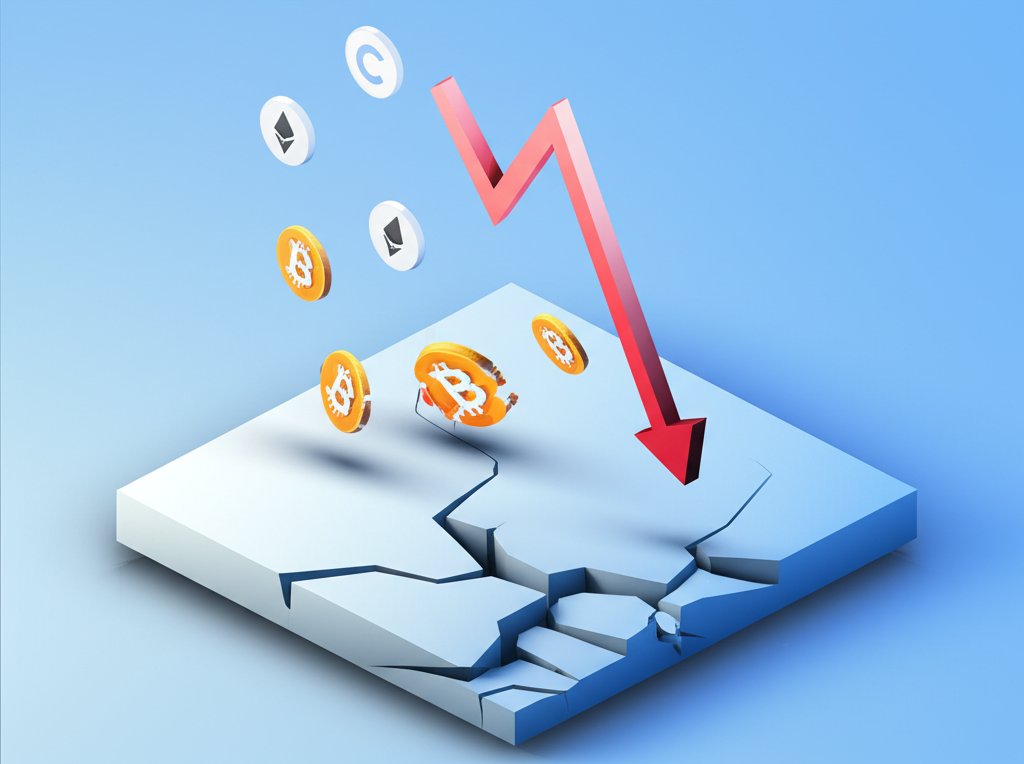
The cryptocurrency market is a rollercoaster, and for investors in Coinbase (COIN), the ride has certainly had its dips. If you've been watching the charts and asking yourself, "Why is Coinbase stock down?" you're not alone. Recent market movements, coupled with specific financial results and broader economic currents, paint a comprehensive picture of the challenges facing the crypto giant.
For anyone holding COIN or considering an investment, understanding these dynamics is crucial. It’s not just about fleeting headlines; it's about dissecting the core business performance, evaluating external pressures, and recognizing the strategic plays Coinbase is making to navigate these turbulent waters.
At a Glance: Key Reasons Coinbase Stock Is Down
- Financial Underperformance: Q1 2025 earnings and revenue significantly missed Wall Street expectations, with EPS falling drastically year-over-year.
- Plunging Transaction Revenue: A sharp drop in both institutional and consumer trading volumes led to a 19% quarter-over-quarter decline in transaction revenue.
- Soaring Operating Costs: Employee growth and increased marketing spend drove a 51.5% year-over-year increase in operating expenses, squeezing profit margins.
- Broader Market Weakness: General stock market downturns, new trading tariffs, and weak U.S. jobs data amplified investor risk aversion.
- Crypto Volatility: Sudden, large-scale crypto market sell-offs, like the recent $77 billion capital wipeout, directly impact trading activity on platforms like Coinbase.
- Regulatory Uncertainty: Despite some positive legal developments, the ongoing regulatory landscape in crypto remains a significant overhang.
A Deeper Dive Into Coinbase's Financial Headwinds
When a stock takes a hit, the first place many investors look is the company's financial report card. For Coinbase, the first quarter of 2025 delivered some concerning numbers that clearly missed the mark set by analysts.
The Earnings and Revenue Miss: Wall Street had high hopes for Coinbase in Q1 2025, but the company fell short. Earnings Per Share (EPS) came in at a disappointing $0.24, dramatically below the anticipated $2.09 and a stark decline from $4.40 in Q1 2024. Revenue, while growing 24% year-over-year to $2.03 billion, still couldn't meet the $2.1 billion forecast. This dual miss signaled trouble, immediately rattling investor confidence.
Net Income Takes a Tumble: Perhaps the most striking figure was the plummet in net income. Coinbase reported just $66 million in net income, a massive drop from the $1.18 billion it achieved in the same quarter the previous year. This significant reduction underscores the pressure on the company's profitability.
Transaction Revenue: The Core Business Under Pressure: Coinbase’s bread and butter is facilitating crypto trades, so transaction revenue is a critical metric. This segment saw a sharp 19% decline from the previous quarter, landing at $1.3 billion. Digging deeper, institutional trading volume fell by 9%, while consumer trading volume dropped by an even more significant 17%. When fewer trades happen, Coinbase earns less. This is a primary factor in why Coinbase stock is down.
Think of it this way: Coinbase is like a stockbroker. If fewer people are buying and selling stocks, the broker makes less commission. The same principle applies here, but with cryptocurrencies. The decreased activity signals a cooling of interest or an increase in caution among both large institutional players and everyday crypto enthusiasts.
The Silver Lining: Subscription and Services Growth: It wasn't all bad news on the revenue front. Coinbase’s subscription and services revenue actually rose by 9% to $698 million. This growth was largely driven by the increasing balances of USD Coin (USDC), where Coinbase earns fees. While positive, the slower growth prospects for this segment couldn't fully offset the significant drop in transaction fees.
The Steep Cost of Growth: Running a major tech platform isn't cheap, and Coinbase's operating expenses surged by an eye-watering 51.5% year-over-year, reaching $1.32 billion. A significant chunk of this increase came from a 30% jump in employee headcount, bringing the total to around 5,200 people, alongside ramped-up marketing expenditure. While investing in talent and market presence is crucial for long-term growth, in the short term, these elevated costs severely squeezed profit margins.
Adjusted EBITDA Under Strain: The combination of falling transaction revenue and rising operating costs had a direct impact on profitability. Adjusted EBITDA, a key measure of operational performance, fell by 8.3% to $930 million. This metric is often used by analysts to gauge a company's underlying earnings power, and its decline indicates fundamental pressure on Coinbase's business model in the current environment.
When External Forces Weigh In: Macro and Crypto Market Headwinds
Coinbase doesn't operate in a vacuum. The broader financial world and the inherently volatile crypto market play significant roles in its stock performance. Understanding these external factors is key to grasping Why Coinbase Stock Is Down.
Broader Stock Market Weakness: The general sentiment across global stock markets can influence how investors view riskier assets like crypto-related stocks. A wider market downturn, often fueled by concerns over economic growth or inflation, tends to push investors towards safer havens, pulling capital away from more speculative holdings like COIN. Adding to this pressure were new trading tariffs and weak U.S. jobs data, which collectively raised investor aversion to riskier assets. This domino effect meant that even if Coinbase's internal operations were stable, the macro environment could still drag its stock down.
Crypto Market Volatility Dampens Retail Activity: The very nature of cryptocurrency — its extreme price swings — can be a double-edged sword for exchanges. While high volatility can sometimes spur trading, too much uncertainty or sustained price drops often cause retail traders to pull back. They become less inclined to buy or sell when prices are unpredictable, leading to reduced trading volumes on platforms like Coinbase.
The Recent Crypto Market Sell-Off: A vivid example of this volatility occurred recently, contributing to the immediate short-term decline in COIN. A widespread sell-off in the crypto market wiped out approximately $77 billion from the total market capitalization. This event was primarily triggered by the liquidation of $1.7 billion worth of leveraged positions, impacting over 400,000 traders. Such large-scale liquidations create a cascade effect, leading to panic selling and significant price drops across various cryptocurrencies. When the underlying crypto assets falter, the platforms that host their trading inevitably feel the pinch, causing Coinbase stock to fall by 3.1% to $331.85 following this event.
This particular dip happened just days after COIN had rallied 7.8% due to optimism surrounding potential crypto regulatory legislation and anticipated interest rate cuts by the Federal Reserve. It perfectly illustrates how quickly sentiment can shift in this market, highlighting the ongoing volatility that Coinbase must contend with. Despite the recent dips, it's worth noting the stock was still up 29.3% year-to-date, though it remained 20.8% below its 52-week high of $419.78 from July 2025.
Regulatory Headwinds: The Unseen Force
The cryptocurrency industry constantly grapples with an evolving and often uncertain regulatory landscape. For a public company like Coinbase, this isn't just background noise; it's a significant factor in investor perception and operational costs.
Persistent Uncertainty: Despite some positive developments, like a major SEC lawsuit against a competitor being dismissed in August 2025 (which hinted at a potentially clearer path for some crypto entities), overall regulatory uncertainty remains. Different jurisdictions have varying rules, and the lack of a unified, clear framework can deter institutional investment and create operational complexities for exchanges. This uncertainty often translates into a "risk premium" that depresses stock prices.
Investors typically favor predictability. When the rules of the game are still being written, or worse, when they differ from one region to another, it makes long-term planning difficult and can scare off those who prefer a more stable investment environment.
Analyst Sentiment and Market Positioning
Professional analysts closely track company performance and market conditions, often adjusting their price targets and recommendations, which in turn can influence investor behavior.
Mixed Signals from the Experts: The analyst community's views on Coinbase have been, predictably, mixed. Barclays, for instance, cut its price target to $300, reflecting concerns about the company's recent performance and the broader market. Conversely, Citi raised its target to $505, suggesting a more optimistic long-term outlook, perhaps factoring in strategic moves or anticipated market improvements. This divergence highlights the complexity of valuing a company at the forefront of a nascent and volatile industry.
A Sign of Institutional Stability: S&P 500 Inclusion: In a significant development, Coinbase’s inclusion in the S&P 500 provided a measure of institutional stability. Being part of such a prestigious index means that many passively managed index funds and ETFs are compelled to hold COIN stock. This provides a baseline demand and can help mitigate some of the extreme volatility, offering a degree of legitimacy and permanency in the traditional financial world. While it doesn't prevent short-term dips, it's a long-term positive for the company's standing.
Strategic Counter-Plays: Coinbase's Moves for Future Growth
Despite the current headwinds and the question of why Coinbase stock is down, the company isn't standing still. It's actively making strategic moves designed to strengthen its position and diversify its revenue streams, preparing for a future where crypto plays an even larger role.
JPMorgan Chase Partnership: Bridging Traditional Finance and Crypto: Coinbase announced a significant partnership with banking giant JPMorgan Chase. This collaboration focuses on bank-to-wallet integration and facilitating reward points transfers. This is a crucial step in making crypto more accessible and seamlessly integrated with traditional financial systems. Partnerships with established financial institutions lend credibility to the crypto space and can open up new user acquisition channels for Coinbase, potentially reducing friction for consumers wanting to enter the market.
Deribit Acquisition: Expanding into Crypto Derivatives: In a bold move, Coinbase acquired the crypto derivatives platform Deribit for $2.9 billion. This acquisition is a strategic play to expand Coinbase's institutional offerings, particularly in the lucrative derivatives market. Deribit is a major player, boasting an annual trading volume of $1 trillion. By bringing Deribit under its umbrella, Coinbase aims to:
- Diversify Revenue: Tap into a different, often more active, segment of the crypto market beyond spot trading.
- Attract Institutional Clients: Derivatives are heavily used by institutional investors for hedging and speculation, providing Coinbase with a stronger appeal to this critical demographic.
- Broaden Product Offering: Offer a more comprehensive suite of services, making Coinbase a one-stop shop for sophisticated crypto traders.
These strategic initiatives demonstrate Coinbase’s commitment to long-term growth and its intention to become a dominant force across various facets of the crypto economy, not just as a simple exchange.
What Does This Mean for Investors? Navigating the Volatility
Understanding why Coinbase stock is down provides valuable context, but the ultimate question for many is: What now? Navigating a volatile stock like COIN requires a thoughtful approach, balancing its innovative position with the inherent risks of the crypto market.
Assess Your Risk Tolerance: Coinbase operates in a high-growth, high-risk sector. Its stock performance is often tied to the broader sentiment and price action of cryptocurrencies. If you're an investor who prefers stability and predictable returns, COIN might not fit your portfolio's risk profile. If you have a higher tolerance for risk and believe in the long-term potential of the crypto economy, the current dips might present opportunities.
Focus on the Long Term vs. Short-Term Noise: The daily fluctuations in COIN's price can be unsettling. However, a seasoned investor looks beyond short-term movements, focusing instead on the company's fundamentals, strategic initiatives, and the long-term growth trajectory of the industry it serves. The earnings misses and market sell-offs are significant, but so are the partnerships and acquisitions that position Coinbase for future expansion. For instance, the Deribit acquisition, while costly, is a long-term play that could yield substantial rewards.
Diversification is Key: No single stock, especially in a nascent industry, should dominate your portfolio. Diversifying your investments across different sectors and asset classes can help mitigate the impact of any single stock's poor performance.
Keep an Eye on Key Metrics:
- Trading Volume: Continue to monitor institutional and retail trading volumes. An uptick here would signal renewed interest and potential revenue growth.
- Operating Costs: Watch how Coinbase manages its operating expenses. Bringing these down relative to revenue growth will improve profitability.
- Regulatory Developments: Stay informed about regulatory changes globally. Clearer, more favorable regulations could be a significant catalyst for Coinbase.
- Strategic Progress: Track the success and integration of partnerships like JPMorgan and acquisitions like Deribit. Are they delivering the anticipated value?
The Allure of Innovation vs. The Test of Profitability: Coinbase is undeniably an innovator, a gateway for millions into the digital asset economy. Its mission to increase economic freedom aligns with a powerful vision. However, for a publicly traded company, that vision must eventually translate into consistent profitability. The recent struggles highlight the challenge of balancing rapid growth and market leadership with the financial discipline expected by shareholders. The current dip represents a period where the market is scrutinizing Coinbase’s ability to turn its strategic ambitions into tangible, bottom-line results.
Moving Forward: What to Watch Next
Coinbase remains a bellwether for the crypto industry, and its stock performance will continue to be a fascinating case study in how a pioneering digital asset company navigates both immense opportunity and formidable challenges. The question of Why Coinbase Stock Is Down isn't just about what happened yesterday, but what it signals for tomorrow.
Keep a close watch on future earnings reports, paying particular attention to transaction volumes and how the company is managing its expanding cost base. Observe the broader crypto market for signs of renewed retail and institutional interest. And crucially, stay informed on the regulatory front, as clear policy could unlock significant potential for Coinbase and the industry at large.
The journey of digital assets is far from over, and Coinbase is still very much at the forefront. For investors, the current period demands careful analysis, patience, and a clear understanding of the fundamental shifts taking place both within the company and across the wider financial landscape.