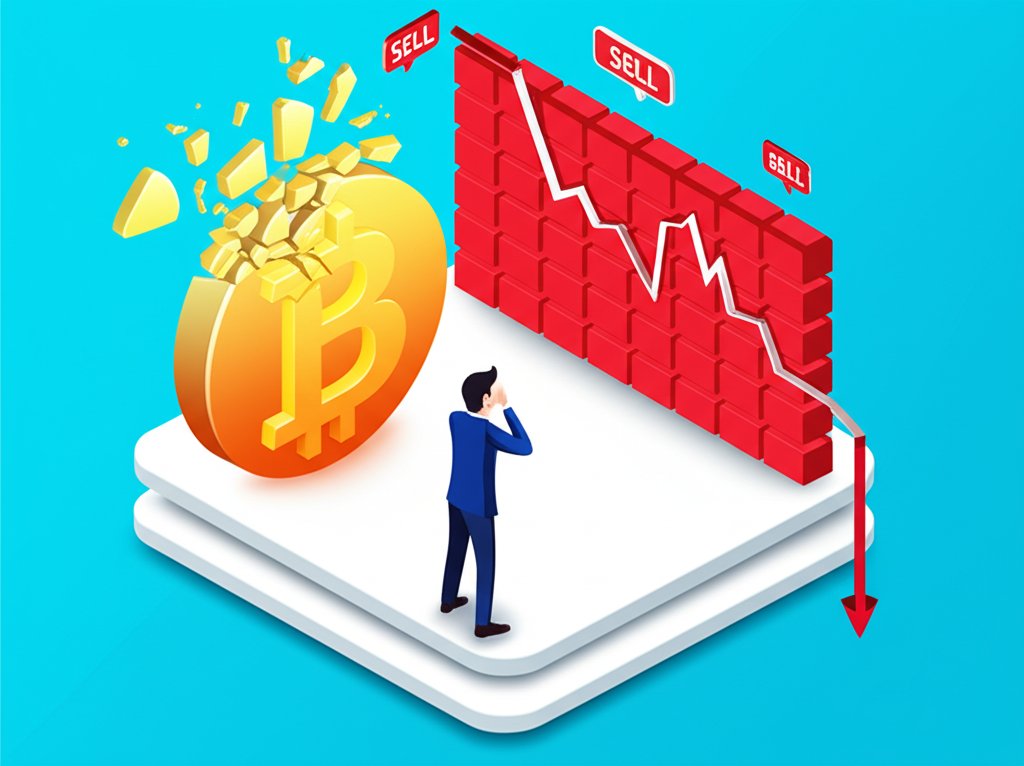
When global markets flinch, Bitcoin often feels the ripple, and right now, many investors are asking: why is Bitcoin down? The answer lies at the intersection of geopolitics, macroeconomics, and the very psychology of risk, all conspiring to trigger a significant investor sell-off.
At a Glance: Understanding Bitcoin's Current Dip
- Tariff Tensions are Key: Renewed threats of heavy US tariffs on Chinese goods are sparking global trade fears, directly impacting investor confidence in riskier assets like Bitcoin.
- Flight to Safety: This uncertainty drives capital out of crypto and into traditional safe havens like gold, silver, and cash, which are seeing record highs.
- Leverage Liquidation: The sudden market shock has forced significant liquidations of leveraged positions, amplifying price drops across the crypto market.
- Beyond Tariffs: Other factors like profit-taking, significant outflows from Bitcoin ETFs, and concerns over Federal Reserve policy and potential US government shutdowns are adding pressure.
- Watch These Indicators: Funding rates, open interest, and stablecoin flows offer crucial insights into market sentiment and potential recovery triggers.
The Tariff Ripple Effect: When Global Trade Rattles Crypto

The immediate catalyst for Bitcoin's recent stumble can be traced directly to renewed global trade tensions, specifically former US President Donald Trump's proposals to impose substantial tariffs and export controls on goods from China. This isn't just political rhetoric; it's a move that analysts like those at Bull Theory warn could significantly disrupt supply chains and accelerate inflation.
When the specter of "trade wars" looms large, the economic outlook grows murkier. Businesses face higher costs, consumer prices could rise, and overall economic stability comes into question. In such an environment, liquidity tends to tighten, making investors wary of holding assets perceived as risky. This includes cryptocurrencies, leading to a palpable shift in market sentiment. For a broader look at how these geopolitical pressures are impacting the market, you might find our main guide on the subject, Bitcoin's tariff-driven fall, helpful.
Decoding Investor Behavior: The Shift from Risk to Refuge

Why does an asset like Bitcoin, often touted as "digital gold," suffer when traditional markets wobble? It boils down to a fundamental re-evaluation of risk. When economic uncertainty spikes, investors tend to divest from volatile assets and reallocate funds to those perceived as safer, more stable stores of value. This is a classic "flight to safety."
Historically, gold has been the premier safe-haven asset, and its recent performance underscores this dynamic. Gold prices have surged to new record highs, reflecting its enduring appeal in times of global instability. Similarly, silver has also climbed significantly. Data indicates that the market capitalization of gold has now surpassed an astounding $27 trillion, while silver is approaching $2.7 trillion. These staggering figures represent capital that, under different circumstances, might have flowed into or remained within the cryptocurrency ecosystem. Investors are choosing the tangible security of precious metals or the immediate liquidity of cash over the speculative potential of digital assets.
The Liquidation Cascade: What Happens When Leverage Unwinds
The rapid downturn isn't merely about selling; it's also about a forced unwinding of positions, particularly those using leverage. Many traders use borrowed capital to amplify their potential returns. While profitable in a bull market, leveraged positions become incredibly vulnerable when prices drop unexpectedly.
As Bitcoin's price began to slide amid the tariff news and broader economic concerns, these leveraged positions faced margin calls. When traders couldn't meet these calls, their positions were automatically liquidated by exchanges, leading to a cascade effect. In a recent 48-hour period, nearly $600 million worth of leveraged positions were liquidated across the crypto market. This mass liquidation added significant downward pressure, contributing to the overall crypto market capitalization shrinking by approximately 1% to $4.14 trillion. This shift is evident in the market's psychological state, too: overall sentiment has moved from "greed" to a more cautious "neutral."
Beyond Tariffs: Other Forces Shaping Bitcoin's Decline
While tariff tensions have been a significant trigger, several other macroeconomic and market-specific factors are contributing to Bitcoin's current dip. These underlying currents mean that even if tariff rhetoric softens, Bitcoin still faces headwinds.
Profit-Taking After the Rally
Bitcoin enjoyed a substantial rally leading up to this recent downturn. Many early investors and those who bought during previous dips are now sitting on significant unrealized gains. When the market shows signs of weakness or uncertainty, it's a natural reaction for some investors to "take profits" – selling a portion of their holdings to lock in gains. This profit-taking, even if not driven by panic, adds selling pressure to the market.
Significant Outflows from Bitcoin ETFs
The introduction of spot Bitcoin Exchange-Traded Funds (ETFs) in the US was a landmark moment, bringing new institutional capital into the crypto space. However, recent data has shown significant outflows from these ETFs. This indicates that some institutional and retail investors who entered via these vehicles are now pulling their funds out, reflecting a cautious or bearish outlook. Large-scale redemptions from ETFs can translate into substantial selling pressure on the underlying asset.
Federal Reserve's Unpredictable Hand
The monetary policy of the US Federal Reserve remains a dominant force in global markets. Uncertainty surrounding future interest rate decisions—whether the Fed will hold rates, cut them, or even consider further hikes—creates volatility. Higher interest rates typically make traditional investments like bonds more attractive, drawing capital away from riskier assets like Bitcoin. The market is constantly trying to "front-run" the Fed, and any hawkish signals or prolonged uncertainty can dampen appetite for crypto.
Looming Government Shutdowns and Fiscal Woes
Concerns about potential US government shutdowns also add a layer of domestic instability. While seemingly distant from crypto, such events can rattle investor confidence in the broader economy, pushing them towards defensive positions. Furthermore, rising inflation expectations, driven by factors beyond tariffs (e.g., persistent supply-demand imbalances, robust wage growth), further complicate the picture. Inflation erodes purchasing power, making investors seek assets that can act as a hedge, but in times of acute uncertainty, even Bitcoin can lose some of that perceived hedge status if the immediate risk is overwhelming.
Navigating the Choppy Waters: Key Indicators and Support Levels
Understanding the current market requires more than just knowing why Bitcoin is down; it means knowing where it is and what to watch next. As per CoinGecko data, Bitcoin is currently trading around $118,223, reflecting a 1.88% dip over 24 hours and a 3.7% decline over the past week. Market observers have identified the $116,000 to $118,000 range as a critical short-term support zone. Breaking below this could signal further downside potential.
To monitor the market's health and anticipate potential reversals, keep a close eye on these key indicators:
- Funding Rates: These are periodic payments exchanged between long and short traders in perpetual futures contracts. Positive funding rates indicate that long traders are paying shorts, suggesting bullish sentiment. Negative rates mean the opposite. Deeply negative funding rates can sometimes precede a short squeeze or a market bottom, as short positions become overextended.
- Open Interest (OI): This metric represents the total number of outstanding derivatives contracts (like futures or options) that have not yet been settled. A high open interest combined with a falling price can suggest that more capital is being committed to bearish bets, signaling sustained selling pressure. Conversely, a sharp drop in OI during a price decline might mean liquidations are tapering off.
- Stablecoin Flows: Tracking the movement of stablecoins (like USDT, USDC) on and off exchanges can provide insights into potential buying or selling pressure. An increase in stablecoins moving onto exchanges could suggest investors are preparing to buy the dip, indicating potential demand. Conversely, stablecoins leaving exchanges might signal investors are moving to fiat or other assets.
Plotting a Recovery Path: What to Watch For
While the current landscape looks challenging, potential triggers for a market recovery do exist. The most immediate relief would come from a softening in tariff rhetoric. If political leaders signal a de-escalation of trade tensions or back away from aggressive protectionist policies, it could immediately reduce global economic uncertainty and restore some investor confidence in risk assets.
Another significant driver for a potential recovery would be a shift in Federal Reserve monetary policy. If the Fed signals a more dovish stance – hinting at future interest rate cuts or pausing its restrictive policies – it could inject liquidity back into the markets. Lower interest rates typically make riskier assets more appealing, drawing capital back into cryptocurrencies.
Beyond these macro factors, an exhaustion of selling pressure and a return of positive sentiment, potentially indicated by funding rates turning less negative or stablecoin inflows increasing, would also pave the way for a recovery.
Your Playbook for Volatility: Smart Moves in Uncertain Times
Navigating a market downturn requires a calm head and a practical strategy. Here's a playbook for investors looking to manage risk and potentially capitalize on future opportunities:
1. Re-evaluate Your Risk Tolerance and Portfolio Allocation
- Self-Assessment: Honestly ask yourself how much volatility you can stomach. Has this downturn caused you undue stress?
- Asset Allocation: Consider whether your current crypto allocation aligns with your long-term financial goals and risk profile. This might be a time to trim positions in highly speculative altcoins or adjust your Bitcoin holdings if you feel overexposed.
- Case Snippet: "If your portfolio is 80% crypto and you're losing sleep, it might be time to diversify into less volatile assets like cash or bonds until the macroeconomic picture clarifies."
2. Dollar-Cost Averaging (DCA) for Potential Entry
- Consistent Buying: Instead of trying to time the bottom (which is notoriously difficult), consider investing a fixed amount of money at regular intervals, regardless of price.
- Mitigate Risk: DCA helps average out your purchase price over time, reducing the impact of short-term volatility. If you believe in Bitcoin's long-term potential, dips offer opportunities to accumulate at lower prices.
- Practical Tip: "Set up a recurring weekly or monthly purchase for a small, manageable amount. This takes emotion out of the equation and builds your position strategically."
3. Secure Your Holdings and Manage Leverage Wisely
- Self-Custody: If you're holding substantial amounts, ensure your crypto is in a secure hardware wallet and that you control your private keys. Exchange hacks can compound losses during market turmoil.
- Avoid Excessive Leverage: This downturn is a stark reminder of the dangers of over-leveraging. If you use derivatives, ensure your collateralization ratios are conservative, or consider reducing your leverage to protect against liquidation.
- Warning: "During high volatility, even a small price swing can trigger a margin call. If you're using 10x leverage, a 10% drop means total liquidation."
4. Stay Informed, Not Overwhelmed
- Focus on Macro Trends: Monitor key economic indicators, central bank statements, and geopolitical developments. These often dictate the broader market sentiment.
- Avoid Panic: Steer clear of sensationalist headlines and "influencers" promoting extreme views. Stick to credible news sources and develop your own informed perspective.
- Action: "Allocate 15-20 minutes daily to review major financial news from reputable outlets, rather than constantly checking price charts or social media."
5. Set Realistic Expectations and Long-Term Vision
- Crypto is Volatile: Remember that cryptocurrency markets are inherently volatile. Downturns are a natural part of their cycle.
- Focus on Fundamentals: Revisit your reasons for investing in Bitcoin. Do the underlying technology and long-term adoption trends still hold? If so, short-term dips are part of the journey.
- Mindset: "View Bitcoin's price movements over years, not days or weeks. This perspective helps filter out the noise of immediate market fluctuations."
Quick Answers: Demystifying Bitcoin's Downturn
Is this the end for Bitcoin?
Highly unlikely. Bitcoin has weathered numerous significant downturns throughout its history, often emerging stronger. While current macroeconomic headwinds are substantial, the underlying technology and growing adoption continue to drive its long-term narrative. This is a correction, not an existential threat.
Should I sell all my crypto now?
That depends entirely on your personal financial situation, risk tolerance, and investment thesis. Panic selling often leads to locking in losses that could recover over time. For long-term investors, market corrections can be opportunities, but for those who over-leveraged or are financially strained, reducing exposure might be a necessary, albeit painful, decision. Consult a financial advisor if unsure.
How long will this downturn last?
Predicting the duration of a market downturn is impossible. It depends heavily on the resolution of current geopolitical tensions, the Federal Reserve's monetary policy path, and the broader economic recovery. Market sentiment can shift quickly, but macro factors often take time to play out. Expect continued volatility in the short to medium term.
What role do stablecoins play in this downturn?
Stablecoins, like USDT or USDC, often act as a temporary refuge within the crypto ecosystem. When investors move out of volatile assets like Bitcoin, they might park their funds in stablecoins to avoid fiat conversion fees and retain flexibility to re-enter the market quickly. A rise in stablecoin holdings on exchanges can sometimes signal potential buying power waiting on the sidelines.
The current pressures on Bitcoin are a complex interplay of global politics, economic policy, and investor psychology. While tariff threats ignited the recent sell-off, broader concerns about inflation, interest rates, and overall market stability are fanning the flames. For investors, understanding these interconnected forces is crucial. Instead of reacting emotionally, arming yourself with knowledge, a clear strategy, and a long-term perspective will serve you best as the market navigates these choppy waters. The ability to distinguish between short-term noise and long-term value is what will ultimately define success in these uncertain times.