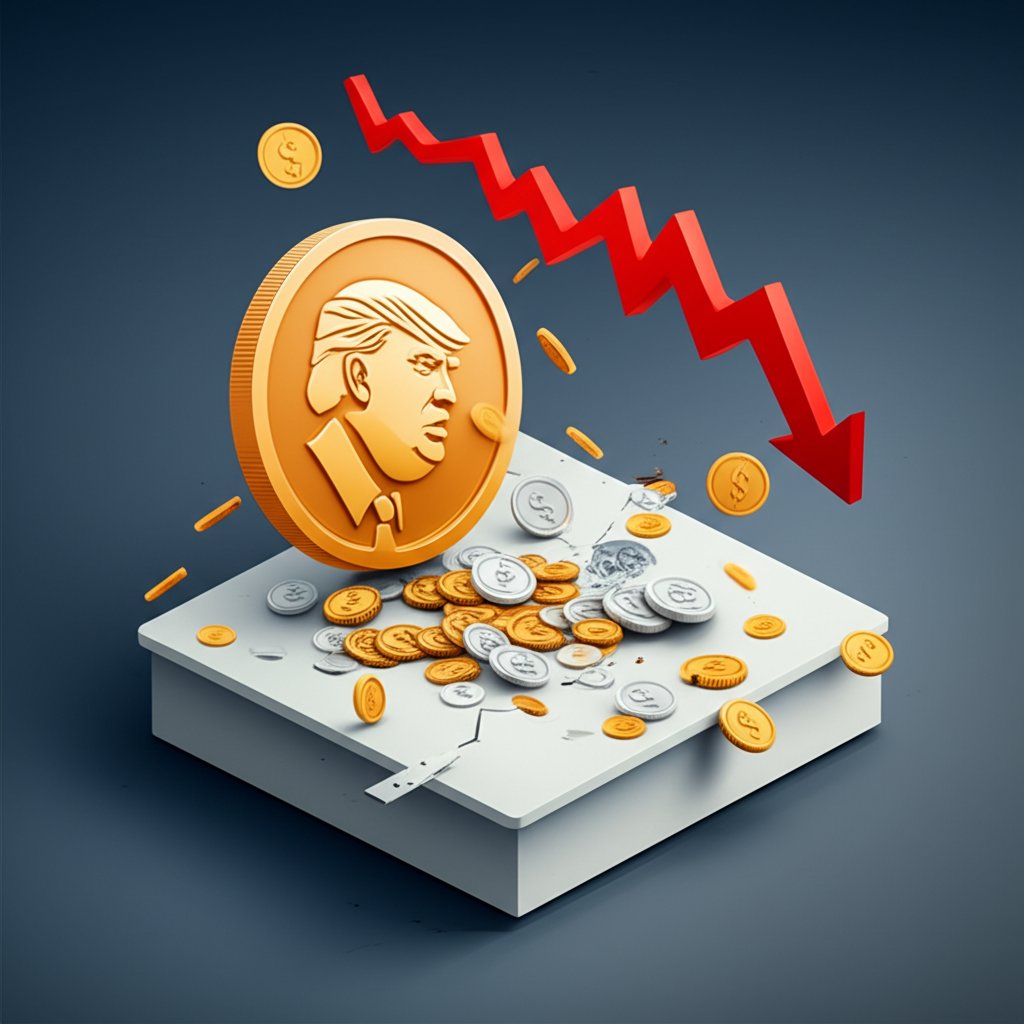
The cryptocurrency market recently saw a dramatic downturn, largely fueled by President Donald Trump's unexpected threat of new tariffs on Chinese imports. This pivotal event, which swiftly transformed the financial landscape, triggered a significant flash crash across digital assets. For anyone tracking trump coin latest news, the impact was immediate and severe, as the popular $TRUMP token plummeted alongside broader market panic, highlighting crypto's sensitivity to macroeconomic and geopolitical shifts.
At a Glance: What You'll Learn and How to Respond
- Understanding the Catalyst: How a political tariff threat ignited a widespread crypto sell-off.
- Quantifying the Crash: Specific asset drops, including the significant dip of the $TRUMP coin.
- Market Mechanics Exposed: The role of leveraged positions and technical glitches in amplifying volatility.
- Navigating Recovery and Uncertainty: Why some assets stabilized while others, like silver, soared.
- Actionable Investment Principles: Strategies to consider for managing risk in volatile markets.
The Spark: Geopolitical Jitters and Market Reaction

When President Trump announced the potential for fresh tariffs on Chinese goods, the financial world braced for impact. Tariffs, essentially taxes on imported goods, are a classic tool in international trade disputes, but their implications ripple far beyond direct trade partners. This particular threat signaled heightened economic tension and uncertainty, prompting a rapid flight from what investors perceive as "risky assets."
Cryptocurrencies, despite their narrative of decentralization, have increasingly become intertwined with traditional financial markets, often behaving like high-beta tech stocks. The immediate fallout was a broad sell-off that saw investors flocking to perceived safe havens. Gold and silver, traditional stores of value, experienced a surge, while growth-oriented sectors, including tech stocks and digital assets, faced intense selling pressure.
Decoding the Crypto Flash Crash: A Deep Dive

The Friday flash crash wasn't just a minor blip; it was a systemic shock that underscored the market's underlying vulnerabilities. Data from CoinGlass revealed a staggering $19 billion in liquidated positions, affecting approximately 1.6 million traders. This scale of liquidation signifies a forced closure of leveraged trades, where investors borrow funds to amplify their positions, often leading to cascading effects during sharp price movements.
- Bitcoin's Plunge: The benchmark cryptocurrency, Bitcoin, dropped a dramatic 15% from around $122,500 to $104,600 at its lowest point. This sudden decline rattled confidence, especially given its recent push towards new highs.
- Ethereum's Slide: Ethereum, the second-largest cryptocurrency by market cap, experienced an even steeper fall, shedding roughly 21% of its value.
- Dogecoin's Halving: Meme coin favorite Dogecoin suffered a brutal blow, dropping by more than 50%. Such extreme volatility is characteristic of assets with lower liquidity and speculative appeal.
- The $TRUMP Coin's Freefall: For those following
trump coin latest news, the native $TRUMP token saw one of the most significant declines, dropping approximately 63%. This highlights how politically tied tokens, while benefiting from specific sentiment, are also highly susceptible to the political figures they represent, especially when those figures make market-moving announcements.
Beyond crypto, traditional markets also felt the sting. The Nasdaq Composite, heavily weighted with tech stocks, dropped 3.56%, and the S&P 500 recorded its worst single day since April. This synchronized downturn across various asset classes paints a clear picture: the tariff threat created a widespread "risk-off" environment.
The Mechanics of a Meltdown: Leveraged Positions and Technical Glitches
Understanding why the market reacted so violently requires looking beyond the initial trigger. The sheer scale of liquidations suggests a prevalence of highly-leveraged positions. When prices begin to fall, these leveraged positions can quickly hit their margin call thresholds, forcing automated sell-offs to cover potential losses. This creates a feedback loop: falling prices trigger liquidations, which in turn push prices down further, leading to more liquidations – a "liquidation cascade."
The volatility was compounded by several technical issues within the crypto ecosystem:
- Stablecoin De-pegging: A notable incident involved a stablecoin on the Binance exchange briefly losing its peg to the US dollar. While quickly resolved, such events erode trust and can fuel panic during periods of high stress. Stablecoins are designed to maintain a 1:1 ratio with fiat currency, and any deviation signals potential instability in the broader crypto infrastructure.
- Speculation of Insider Trading: Social media was abuzz with speculation about potential insider trading, particularly concerning large sell orders placed just before or during the initial crash. While unconfirmed, such rumors can exacerbate fear and uncertainty, influencing retail investor behavior.
These factors together transformed a significant market downturn into a chaotic flash crash, making it difficult for even experienced traders to navigate.
Navigating the Aftermath: Stabilizing But Cautious Markets
By Monday, a degree of stability returned to the markets, though underlying caution lingered. Bitcoin recovered somewhat, settling around $115,000 after its weekend low, having previously hit a record high above $126,000 on October 6. This resilience, while encouraging, doesn't erase the lessons learned.
Expert analysis points to enduring structural forces supporting crypto's long-term trajectory. Samir Kerbage, CIO at Hashdex, noted that factors like Bitcoin ETF adoption and persistent institutional inflows continue to underpin growth. These macro trends suggest that while short-term volatility can be intense, the fundamental appetite for digital assets remains strong among a significant segment of the investment community. For a broader perspective on how institutional adoption shapes high-value holdings, consider exploring Trump's elite Bitcoin holdings, which reflect a growing trend among prominent figures to integrate digital assets into their portfolios.
However, the broader market uncertainty persisted. Silver futures, for example, soared 7% to an all-time high on Monday, indicating a continued preference for traditional safe-haven assets. This divergence illustrates that while crypto may have its long-term champions, geopolitical instability can still quickly drive capital into more conventional hedges.
Beyond the Headlines: Strategic Insights for Crypto Investors
The recent flash crash provides a stark reminder of crypto's inherent volatility and its increasing susceptibility to global macroeconomic events. For investors, particularly those new to the space or heavily invested in specific tokens like $TRUMP, this event offers critical lessons.
Reassessing Your Risk Profile
Every investor has a different tolerance for risk. This crash is an excellent opportunity to honestly evaluate yours. Were you able to sleep through the crash, or did the prospect of significant losses keep you up? Your answer should guide your portfolio allocation moving forward. High-beta assets like cryptocurrencies demand a clear understanding of potential downside.
The Power of Diversification
Putting all your eggs in one basket, whether it's a single altcoin or even just Bitcoin, amplifies risk. While the entire market may dip, diversification across different asset classes (e.g., traditional stocks, bonds, precious metals, and a variety of crypto assets) can help mitigate losses during a sector-specific downturn. The performance of gold and silver during the crash serves as a strong argument for this principle.
Understanding Leverage and Margin
The $19 billion in liquidations speaks volumes about the dangers of excessive leverage. While leverage can magnify gains, it equally magnifies losses, leading to forced sales at the worst possible times. For most retail investors, avoiding or significantly limiting leveraged positions is a prudent strategy. If you do use leverage, ensure you understand the margin requirements and have sufficient collateral to withstand significant price swings.
The Importance of a Long-Term View
For those investing based on fundamental adoption, technological innovation, or a belief in the long-term potential of digital assets, short-term market fluctuations can be viewed differently. Instead of panicking, a long-term perspective allows investors to ride out volatility and potentially even see significant dips as buying opportunities, provided their underlying investment thesis remains intact.
Technical Glitches and Exchange Reliability
The unpegging of a stablecoin and whispers of insider trading highlight the need for due diligence when choosing exchanges and platforms. Opt for reputable, well-regulated exchanges with a strong track record of security and operational stability. Understand their policies regarding stablecoins and how they handle extreme market conditions.
Practical Playbook: Navigating Volatile Crypto Markets
When headlines scream about crashes and the value of your portfolio fluctuates wildly, having a clear plan is crucial. This event reinforces several best practices for investors.
- Define Your "Why": Before investing in any crypto, especially politically-linked tokens like $TRUMP, clearly define your investment thesis. Are you speculating on short-term sentiment, or do you believe in its long-term utility? Your "why" dictates your reaction to news.
- Set Stop-Loss Orders: For active traders, stop-loss orders are non-negotiable. They automate the selling of an asset if it drops below a certain price, limiting potential losses. This is particularly vital in fast-moving markets where manual reactions can be too slow.
- Maintain a Cash Reserve: Always keep a portion of your portfolio in stablecoin or fiat. This provides dry powder to buy dips if you believe in the asset's recovery, or simply a buffer against further losses.
- Practice Dollar-Cost Averaging (DCA): Instead of trying to time the market, invest a fixed amount at regular intervals. This strategy smooths out your average purchase price over time, reducing the impact of short-term volatility.
- Monitor Macroeconomic News: Recognize that crypto is no longer an isolated market. Geopolitical events, central bank policies, and inflation data can all impact prices. Stay informed about broader economic trends.
Quick Answers: Addressing Common Concerns
Is the $TRUMP coin inherently riskier than other cryptocurrencies?
Tokens directly tied to political figures or highly specific narratives, like the $TRUMP coin, tend to carry additional layers of risk. Their value can be exceptionally sensitive to the news cycle, public sentiment, and the actions/statements of the individual they represent. While offering potential for rapid gains during favorable sentiment, they also face amplified volatility during negative developments, as seen in the recent plunge. Diversifying away from such highly concentrated risk is often prudent.
How can I protect myself from flash crashes?
Protection strategies include:
- Avoiding excessive leverage: The primary cause of cascading liquidations.
- Setting stop-loss orders: Automating your exit point to limit losses.
- Diversifying your portfolio: Spreading risk across various asset classes and different types of cryptocurrencies.
- Maintaining a stablecoin or cash reserve: To buy dips or protect capital.
- Using reputable exchanges: To minimize technical risks.
Does this crash indicate a fundamental weakness in Bitcoin or Ethereum?
While the crash was severe, expert opinions, like that of Samir Kerbage, suggest that structural forces like ETF adoption and institutional inflows continue to support long-term growth for Bitcoin and Ethereum. The crash was largely triggered by an external macroeconomic shock (tariff threat) and amplified by market structure (leveraged positions), rather than a fundamental flaw in the underlying technology or a loss of confidence in their long-term value proposition. They remain dominant forces, but are not immune to market-wide risk-off events.
Should I sell all my crypto after such an event?
A knee-jerk reaction to sell everything during a crash is often detrimental. Instead, re-evaluate your investment thesis, risk tolerance, and long-term goals. If your initial reasons for investing still hold, and you've managed your risk appropriately, riding out the volatility or even strategically buying more might align with your plan. Panic selling often locks in losses that could recover over time.
Preparing for the Next Turn in Crypto's Unpredictable Road
The recent market turbulence, highlighted by the significant drop in the $TRUMP coin, serves as a powerful reminder: the crypto market remains a high-stakes arena, where geopolitical machinations can have immediate and dramatic consequences. For investors, this isn't a signal to abandon the space, but rather an imperative to approach it with heightened awareness and robust risk management strategies. By understanding the interplay of macroeconomics, market structure, and individual asset behavior, you can better navigate these challenging waters. The goal isn't to avoid volatility entirely—that's often impossible—but to build a resilient portfolio and a disciplined mindset that can withstand the inevitable storms.