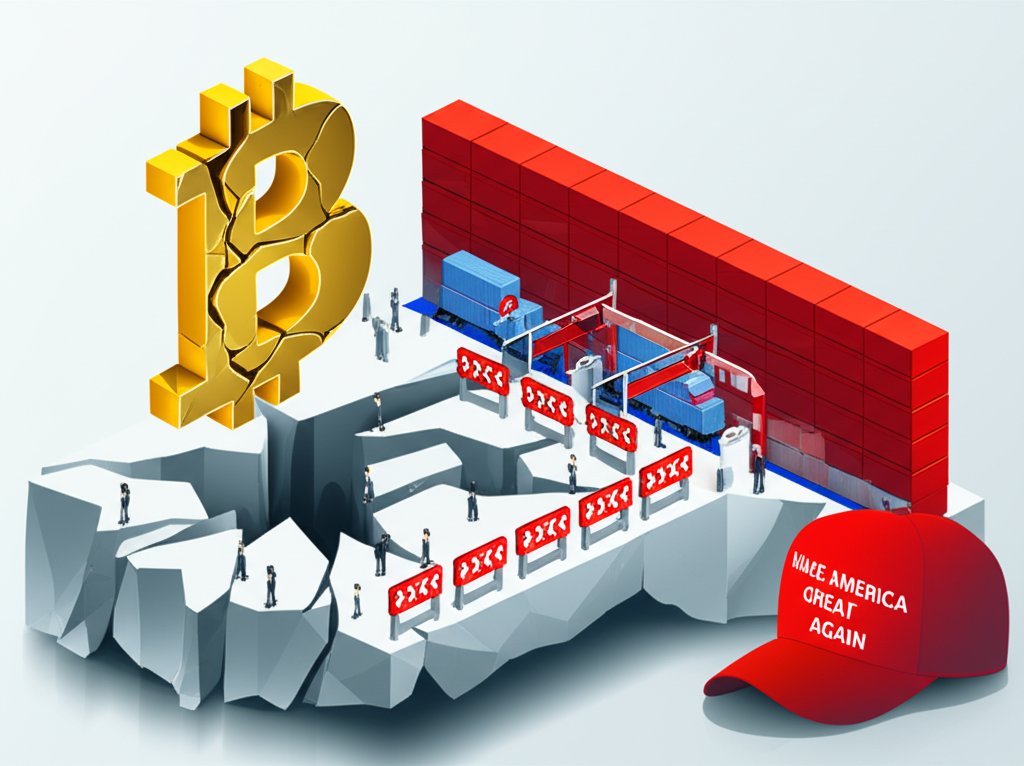
When trade tensions escalate between global powers, Bitcoin often finds itself caught in the crosscurrents, manifesting as a sudden and significant 'bitcoin falling' phenomenon. The recent threats by former President Trump to impose 100% tariffs on certain Chinese imports, coupled with the US investigation into China's shipbuilding expansion, have sent ripples through financial markets. This isn't just a political squabble; it's a direct catalyst affecting investor confidence, pushing them away from riskier assets like cryptocurrencies and towards perceived safe havens. The ensuing market uncertainty, exacerbated by China's swift retaliatory measures, creates a perfect storm where Bitcoin’s volatility is amplified, demanding a careful, informed approach from investors.
At a Glance: What You Need to Know
- Tariff Fallout: US-China trade tensions directly trigger Bitcoin's downturn by increasing global economic uncertainty.
- Investor Flight: Fear of an economic slowdown drives investors from risk assets (like crypto) to safer ones (gold, cash).
- Key Support Levels: Watch the $116,000 to $118,000 range for potential short-term support.
- Recovery Triggers: Market recovery largely depends on de-escalation of tariff rhetoric or signals of monetary policy easing.
- Essential Indicators: Monitor funding rates, open interest, and stablecoin flows to gauge market sentiment.
- Actionable Strategy: Review your risk exposure, consider portfolio diversification, and stay informed on geopolitical developments.
The Trade War Domino Effect on Bitcoin's Price

The recent bitcoin falling trend isn't happening in a vacuum; it’s a direct consequence of escalating trade hostilities, particularly between the US and China. When President Trump’s administration signals aggressive tariff actions, such as the threat of 100% tariffs on specific Chinese imports, it's not just an economic policy; it's a geopolitical statement that rattles global markets. The response from China, like the restrictions placed on Hanwha Ocean Co. – a South Korean shipbuilder with US federal contracts and shipyards – demonstrates a tit-for-tat escalation. This tit-for-tat dynamic creates an environment of profound uncertainty, making investors jittery.
Think of it as a domino effect: Tariffs lead to retaliation, which then sparks fears of a broader US economic slowdown. This slowdown fear, in turn, makes investors question the stability and future returns of high-risk assets. Cryptocurrencies, despite their decentralized nature, are still perceived as risky when compared to traditional safe havens like gold or even cash during periods of extreme economic anxiety. This fear precipitates a move out of Bitcoin, causing its price to drop. According to recent data, Bitcoin saw a decline of up to 3.7% in a single week, trading around $118,223, reflecting a wider trend of investors de-risking their portfolios. For a deeper dive into how broader tariff policies can influence cryptocurrency markets, see our pillar article on Why Trump's tariffs affect BTC.
Navigating Bitcoin's Volatility: Key Market Indicators to Track

In a market where 'bitcoin falling' can be swift and sharp due to external geopolitical pressures, understanding key indicators is paramount. These aren't just abstract numbers; they're signals that can help you gauge market sentiment and potential price movements, giving you an edge beyond simply reacting to headlines.
1. Funding Rates: Gauging Futures Sentiment
Funding rates are a crucial metric in the perpetual futures market, indicating the cost of holding a long or short position. Positive funding rates mean long position holders are paying shorts, suggesting a bullish sentiment. Conversely, negative funding rates imply shorts are paying longs, signaling bearishness. When tariffs drive bitcoin falling, you'll often see funding rates turn negative, indicating that the prevailing sentiment among leveraged traders is to short Bitcoin, expecting further price declines. A sustained period of negative funding, especially after a significant drop, can sometimes precede a short squeeze or a reversal as over-leveraged shorts get liquidated.
2. Open Interest: Tracking Market Participation
Open interest represents the total number of outstanding derivative contracts (futures or options) that have not been settled. A high open interest combined with a price drop indicates significant participation in bearish bets, potentially increasing volatility. When you see bitcoin falling alongside a surge in open interest, it tells you that many traders are actively positioning themselves for further downside. However, if open interest declines during a price drop, it might signal that traders are closing out positions, potentially reducing selling pressure and hinting at a possible bottom.
3. Stablecoin Flows: A Proxy for Buying Power
Stablecoins (like USDT or USDC) are digital assets pegged to fiat currencies, typically the US dollar. Tracking their inflow and outflow from exchanges can offer insights into potential buying pressure. During a period of bitcoin falling, a significant inflow of stablecoins to exchanges could suggest that investors are moving funds to the sidelines, preparing to buy the dip once they perceive a bottom. Conversely, stablecoin outflows might indicate investors are withdrawing funds from exchanges, perhaps to move to traditional assets or simply wait out the volatility.
Identifying Support Zones: The $116,000 – $118,000 Range
Market observers are closely watching the $116,000 to $118,000 zone as a potential short-term support level. This range represents a price point where historical buying interest might emerge, or where significant technical indicators converge, potentially halting further declines. A rebound from this area would offer a glimmer of hope, while a decisive break below it could signal a deeper downward trend. Monitoring how Bitcoin reacts to this range, especially in conjunction with the other indicators, is crucial for short-term decision-making.
Your Playbook for Times of Tariff-Driven Bitcoin Falling
When headlines about tariffs and trade wars lead to 'bitcoin falling', panic can set in. But as an informed investor, you have a playbook to navigate these turbulent waters. The goal isn't to perfectly predict the bottom, but to manage risk and position yourself for future recovery.
1. Assess Your Risk Exposure and Leverage
Before making any moves, take a cold, hard look at your current crypto portfolio.
- What percentage of your total assets is in Bitcoin and other cryptocurrencies? If it's too high, especially relative to your risk tolerance, it might be time to rebalance.
- Are you using leverage? Highly leveraged positions are extremely vulnerable during sharp market downturns. Even a modest bitcoin falling event can lead to rapid liquidations, wiping out capital quickly. Consider reducing or eliminating leverage until market stability returns. A simple example: If you're 5x leveraged, a 20% drop in Bitcoin's price means a 100% loss of your collateral.
2. Diversification Beyond Crypto: Considering Safe Havens
The narrative of Bitcoin as "digital gold" gets tested during major economic uncertainties. While it has hedging properties against inflation, it currently behaves more like a risk asset during acute financial stress.
- Consider traditional safe havens: During periods of intense bitcoin falling due to economic fears, assets like physical gold, US Treasury bonds, or even simply holding cash (or stablecoins) can provide stability. This isn't about abandoning crypto but creating a balanced portfolio that can withstand various market shocks.
- Allocate strategically: You don't need to liquidate all your crypto. A strategic allocation, perhaps 5-10% of your portfolio in traditional safe havens during peak uncertainty, can cushion potential losses from riskier assets.
3. Patience and a Long-Term View: Avoiding Impulsive Decisions
Emotional trading is often losing trading. When 'bitcoin falling' headlines dominate, there's a strong urge to sell everything to prevent further losses or to buy aggressively, hoping for an immediate bounce.
- Resist impulsive actions: Market bottoms are rarely clear until after they've passed. Selling at the bottom or buying too early in a falling knife scenario can be detrimental.
- Revisit your investment thesis: Why did you invest in Bitcoin in the first place? If your long-term conviction remains strong, these short-term shocks, while painful, might be viewed as opportunities or simply noise. Historically, Bitcoin has recovered from significant drawdowns, often surprising those who sold in panic.
4. Monitoring Geopolitical News: Stay Informed, Not Overwhelmed
While you shouldn't let every tweet dictate your portfolio, understanding the macro landscape is crucial.
- Focus on credible sources: Follow reputable financial news outlets and analysts who cover global trade and economics.
- Identify potential triggers for de-escalation: Is there any talk of negotiation? Are central banks hinting at monetary policy easing to counteract economic slowdowns? Such signals can be precursors to market recovery and a rebound for Bitcoin. The current market situation, for instance, suggests recovery hinges on "softening tariff rhetoric or signals of easing monetary policy."
Real-World Scenario: A Trader's Dilemma During Tariff Shocks
Imagine Sarah, a cryptocurrency investor with a portfolio heavily weighted in Bitcoin. News breaks about escalating US-China trade tensions, specifically the Hanwha Ocean Co. restrictions, causing bitcoin falling by 3.7% in a week. Sarah feels the pressure.
Initial Reaction: Sarah's first instinct is to panic sell a significant portion of her Bitcoin to stop the bleeding. She's also watching her leveraged positions closely, fearing liquidation.
Applying the Playbook: Instead of an impulsive sell, Sarah pauses.
- Risk Assessment: She reviews her portfolio. 70% in crypto, 30% in cash. Her leveraged positions are modest (2x). She realizes her overall crypto exposure is high for her comfort during such uncertainty.
- Strategic Adjustment: She decides to reduce her leveraged positions to zero, locking in some smaller losses but preventing a total wipeout if Bitcoin drops further. She also reallocates 10% of her crypto portfolio into a stablecoin like USDC, effectively increasing her cash position to 40% and reducing crypto exposure to 60%. This gives her liquidity to potentially buy back if Bitcoin finds a clear bottom or to simply weather the storm.
- Indicator Watch: She monitors funding rates, which are negative, and open interest, which is declining slightly. This suggests some bearish sentiment but also that some traders are closing positions, which might hint at selling pressure easing. She pays close attention to the $116,000 support level.
- Long-Term View: Remembering her conviction in Bitcoin's long-term value, she commits to holding her remaining spot Bitcoin for now, focusing on the historical pattern of recovery after major drawdowns. She prioritizes staying informed about trade talks.
By taking a structured approach, Sarah avoids an emotional knee-jerk reaction, protects her capital from forced liquidation, and positions herself to potentially capitalize on a future recovery, all while reducing her immediate stress.
Quick Answers to Common Concerns
Is Bitcoin no longer a safe haven against economic uncertainty?
During acute, geopolitically driven economic uncertainty, Bitcoin often behaves more like a risk-on asset rather than a traditional safe haven like gold or government bonds. Its volatility makes it less attractive to investors seeking stability in a crisis. However, its long-term narrative as an inflation hedge and store of value remains, but these tariff-driven events highlight its sensitivity to broader market sentiment. It's not that it's never a safe haven, but its "digital gold" status is still evolving and is heavily impacted by short-term market dynamics.
Should I sell all my Bitcoin when tariffs are announced?
Panicking and selling all your Bitcoin immediately after a tariff announcement is rarely the best strategy. Markets often overreact, and attempting to time the bottom is extremely difficult. Instead, assess your risk tolerance, review your portfolio allocation, and consider strategic adjustments like reducing leverage or diversifying into stablecoins or traditional safe havens. A disciplined approach, rather than an emotional one, is key during periods of bitcoin falling.
How long do these tariff-driven downturns usually last for Bitcoin?
The duration of tariff-driven downturns is highly unpredictable, as it depends entirely on the political and economic landscape. De-escalation of rhetoric, resolution of trade disputes, or significant shifts in monetary policy (like interest rate cuts to stimulate the economy) can all contribute to market recovery. Historically, Bitcoin has shown resilience, but specific timelines are impossible to predict. Focus on market indicators and macro developments rather than arbitrary timeframes.
What's the biggest mistake investors make when Bitcoin is falling due to trade wars?
The biggest mistake is often emotional decision-making:
- Panic Selling: Liquidating positions at the bottom out of fear.
- Over-Leveraging: Maintaining high leverage, leading to forced liquidations during drops.
- Ignoring Macro Factors: Failing to understand why Bitcoin is falling and how broader economic and geopolitical events influence its price.
- Impulsive Buying: Trying to catch a "falling knife" without clear support signals, leading to further losses.
Immediate Steps Amidst Economic Uncertainty
When trade wars drive 'bitcoin falling', clarity and decisive action are your best allies. Here’s a quick-start guide to navigate the immediate aftermath:
- Review Your Position: Check your Bitcoin holdings. Are you comfortable with your current exposure given the heightened risk? If not, identify how much you're willing to hold through the volatility.
- De-Leverage: If you have leveraged positions, seriously consider closing them or significantly reducing your leverage. Even small losses now can prevent catastrophic ones later.
- Observe Key Indicators: Pay close attention to funding rates (negative means bearish), open interest (if it drops, selling pressure might ease), and stablecoin inflows (potential buying power). Look for Bitcoin's reaction around the $116,000 – $118,000 support zone.
- Don't Rush to Buy the Dip: While opportunities arise, resist the urge to buy into a "falling knife." Wait for signs of stabilization or a clear rebound, ideally supported by improving market indicators and macro sentiment.
- Stay Informed, Remain Calm: Follow reliable news sources for updates on trade talks and economic data. Remember that market sentiment can shift quickly. Emotional decisions are often costly. Focus on your long-term strategy and what you can control.